
An AI phone agent books accurately when it treats every booking as a two-step contract: place a temporary calendar hold, then confirm only after the contact verifies by SMS or email and required fields pass deterministic checks. We built that pattern in production so calls create real revenue, not ghost slots.
AI phone agent booking automation is the practice of using a voice agent to schedule appointments with verifiable consent, data checks, and safe fallbacks so no calendar gets polluted with false bookings.
The problem it solves
A naive voice bot books on intent alone, which creates ghost appointments and angry teams. The fix: deterministic gates that require a verified contact and required fields before turning a hold into a confirmed event.
| Manual booking | Automated with verification |
|---|---|
| Agent answers, confirms details, places a booking, sometimes forgets to add required fields. | AI agent collects required fields, places a soft hold, and only confirms after SMS or email verification completes. |
| Missed DNC checks and time-zone mistakes. | Automated DNC scrubs and time-zone normalization before any outreach or booking. |
| Human catches resource conflicts late. | Calendar-hold conflict checks and provider availability validated in real time. |
| No paper trail on ambiguous calls. | Full call transcript, verification log, and booking audit record saved. |
How the automation works
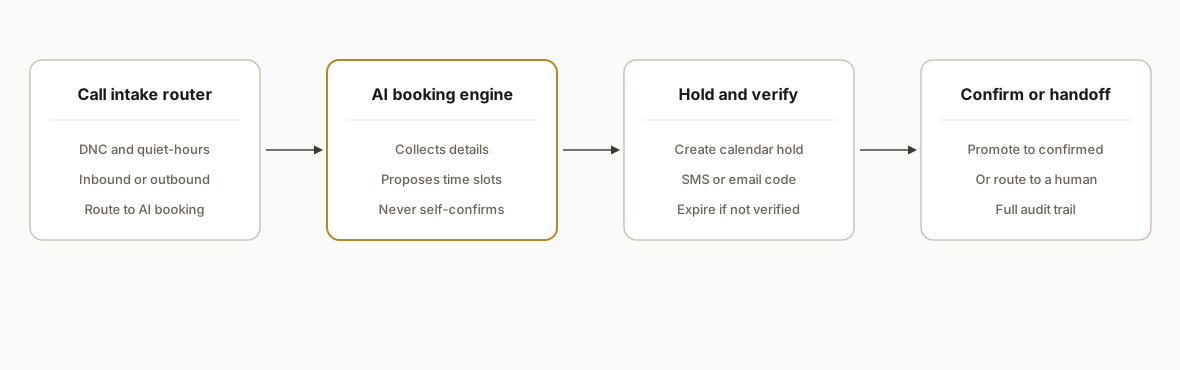
The architecture runs one linear path with two escape hatches: a verification gate and a human fallback. The AI proposes, the system holds, the contact verifies, and only then the calendar confirms. If anything fails, a human takes over with all context preserved.
- Intake router: Routes inbound or outbound calls to the AI booking flow and applies DNC and time-window rules first.
- AI booking engine: Gathers intent and required fields. Suggests times from the live availability feed but never confirms on its own.
- Verification and hold: Creates a soft hold and sends a one-time verification link or code by SMS or email. Confirms only after the code or link is redeemed.
- Human fallback: If the agent is unsure or verification fails, hand off to a person with transcript, proposed slot, and captured fields, then finalize.
Step-by-step: how to build it
1) Route calls and apply DNC and window rules first
Block or reroute before any AI interaction. Check your internal DNC list and apply a national registry scrub through your telephony provider or a compliance partner. Enforce quiet hours to stay within consented windows.
// router.ts
export function routeIncomingCall(call: Call) {
  if (isOnInternalDNC(call.from)) return sendDNCNoticeAndEnd(call);
  if (!withinAllowedWindow(call.fromTz, policy.allowedHours)) return sendCallbackOffer(call);
  return startAiBookingFlow(call);
}
Key gotcha: keep an internal DNC ledger in addition to any national registry checks. Respect channel-level opt outs from prior SMS or email sequences.
2) Ask the AI to collect fields, but keep validation deterministic
Let the model gather purpose, preferred time window, service type, and contact details. Then enforce hard checks in code: required fields present, values sane, and the time window in the future.
// validate.ts
export function validateIntent(intent: Intent): Validation {
  const errs: string[] = [];
  if (!intent.contact.email && !intent.contact.phone) errs.push("Missing contact method");
  if (!intent.service) errs.push("Missing service");
  if (!intent.window || intent.window.start <= Date.now()) errs.push("Invalid time window");
  return { ok: errs.length === 0, errs };
}
Key gotcha: never let the model decide that validation passed. The model proposes. Code decides.
3) Place a calendar hold, not a confirmed event
Create a temporary hold that expires automatically if verification does not arrive in time. The provider calendar should show this hold as tentative.
// holds.ts
export async function createHold(slot: Slot, contact: Contact): Promise<Hold> {
  const holdId = await calendar.createTentative({
    start: slot.start,
    end: slot.end,
    title: `Hold: ${contact.name}`,
    meta: { contactId: contact.id }
  });
  await holdsLedger.put({ holdId, contactId: contact.id, slot, status: "PENDING", expiresAt: Date.now() + 15 * 60 * 1000 });
  return { holdId, slot };
}
Key gotcha: enforce one active hold per contact. If a new hold comes in, cancel and replace the old one.
4) Send a one-time verification code or link
Deliver verification by the fastest channel the contact provided. Code-based flows suit voice-first. Link-based flows add clarity when email is available.
// verify.ts
import { randomBytes } from "crypto";

export async function sendVerification(hold: Hold, contact: Contact) {
  const code = randomBytes(3).toString("hex").toUpperCase();
  await tokens.put({ key: `verify:${hold.holdId}`, code, ttlSec: 900 });
  const msg = `Confirm your appointment hold ${short(hold.slot)}. Your code: ${code}`;
  return contact.phone ? sms.send(contact.phone, msg) : email.send(contact.email, `Confirm your hold`, `${msg}`);
}

export async function redeemVerification(holdId: string, code: string) {
  const rec = await tokens.get(`verify:${holdId}`);
  if (!rec || rec.code !== code) return { ok: false };
  await tokens.del(`verify:${holdId}`);
  return { ok: true };
}
Key gotcha: throttle attempts and expire codes. Log redemptions to an audit table for compliance.
5) Promote the hold to a confirmed event only after verification
On successful redemption, convert the tentative event into a confirmed booking and send confirmations through both channels if available.
// confirm.ts
export async function confirmFromHold(holdId: string) {
  const hold = await holdsLedger.get(holdId);
  if (!hold || hold.status !== "PENDING") throw new Error("Hold missing or invalid");
  await calendar.confirmEvent(hold.holdId);
  await holdsLedger.update(holdId, { status: "CONFIRMED" });
  await notifyContact(hold.contactId, `Confirmed: ${short(hold.slot)}`);
}
Key gotcha: re-read calendar state before promotion. A human may have scheduled over the hold. If conflict is detected, propose alternates.
6) Fail safe: escalate to a human with everything they need
If validation fails, verification expires, or the agent expresses low confidence, route to a person. Pass the full transcript, captured fields, and the proposed slot so a human can fix it in one call.
// fallback.ts
export async function escalate(caseId: string, payload: Escalation) {
  await helpdesk.createTicket({
    subject: `Booking assist: ${payload.contact.name}`,
    body: JSON.stringify(payload, null, 2),
    tags: ["booking", "ai-escalation"]
  });
  return sms.send(payload.contact.phone, "We are connecting you with a scheduler to finalize your appointment.");
}
Key gotcha: measure mean time to human answer. An escalation that sits for hours turns a save into a churn.
Where it gets complicated
False positives from the model. We saw an outbound AI dialer misclassify generic interest as a booked appointment. The fix was two layers: tighten prompts to reduce over-eager booking language, then add a deterministic guard that blocks calendar writes unless verification and required fields exist. Post-fix, false bookings stopped.
Vendor billing gotchas. Some TTS providers allow overage billing even when you exceed your plan. Add a quota check that pauses campaigns before you burn surprise spend.
STT and barge-in. If the agent cannot reliably hear an email address while the contact is talking over prompts, accuracy tanks. Use explicit spell-back prompts and short chunks with confirmations.
Time zones and daylight saving. Never assume the caller's time zone. Infer from carrier metadata when available and always repeat back the time with the zone. Store everything server-side as UTC.
Double-booking under concurrency. If you offer the same slot to two callers, your hold must lock inventory. Use an atomic ledger and treat slot allocation as a transaction.
DNC and consent across channels. Phone DNC is not the same as SMS consent. Maintain channel-level consent flags and never cross one channel's consent to another without an explicit opt in.
What this actually changes
We shipped this pattern on an outbound AI dialer that moved from false bookings to verified bookings by splitting proposal from confirmation and adding a human gate on edge cases. The value was structural: calendars stayed clean, sales reps trusted the system again, and the no-drama template carried to new campaigns without rework.
One reason to care about scrubbing and consent: the FTC reports that the National Do Not Call Registry contains over 240 million active registrations, a reminder that DNC compliance is not optional for large-scale calling. Source: https://www.ftc.gov.
Frequently asked questions
What is the best way to stop false bookings by an AI phone agent?
Require a two-step flow: calendar hold first, verification second. Confirm the appointment only after the contact redeems an SMS or email code and all required fields pass deterministic checks. Escalate edge cases to a human.
Can this work with my existing calendar and CRM?
Yes. The hold and confirm pattern sits between your AI agent and your scheduling system. It reads availability, creates tentative events, then promotes or cancels. The CRM receives the final state and the audit trail.
How do you handle DNC and consent?
We scrub against internal DNC first, then apply a national registry check through your compliance stack. Consent is tracked per channel. Phone opt out does not grant SMS or email permission.
Does this slow down booking?
It adds a short verification step, but it avoids hours of cleanup and lost trust. For voice-first flows, code-by-SMS is fast. For email, link confirmation works well when the contact is at a keyboard.
What happens if verification fails or expires?
The hold auto-expires and a human follows up with full context. Nothing confirmed hits the calendar until the contact verifies, which prevents ghost slots.
If you want an AI phone agent that books accurately, we already built and hardened the verification and hold pattern that makes it reliable. See our service pages for the voice layer and integrations under AI voice agents and a related post on AI dialers at scale. Or if you want to skip the design work and ship the guardrails that matter, book a 15-minute call.
Want us to build this for you?
Nine questions, about 90 seconds. You see the hours it is costing you, then pick a time. No pitch.
Get your free assessment